Thanks to the installation of photovoltaic panels on our roofs, we now generate nearly 60% of the energy we consume . This commitment to solar energy allows us to drastically reduce the carbon footprint of our operations and move towards a cleaner, more efficient, and environmentally friendly energy model. The sun that ripens our grapes is also the source that powers our pumps, cools our tanks, and brings the winery to life.
But sustainability at EL GRIFO goes beyond energy efficiency. It represents a way of understanding the land, working the soil, and protecting a landscape that is part of everyone's heritage.
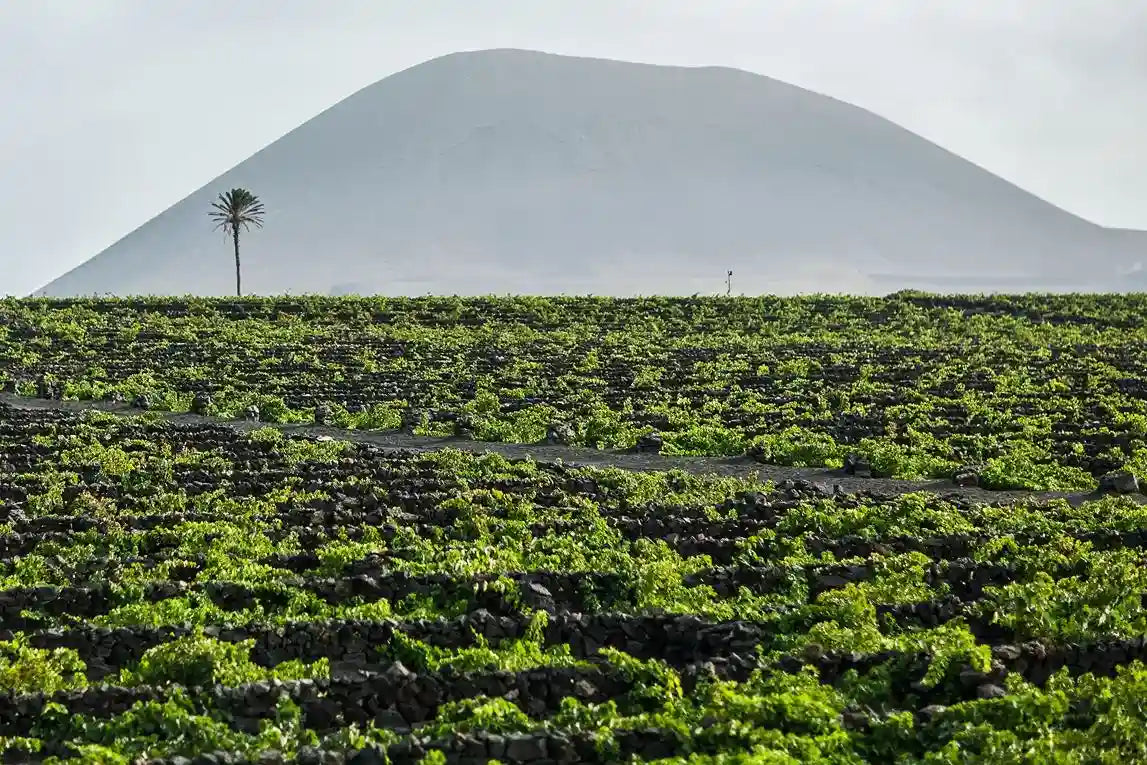
La Geria , where the winery is located, is a unique environment in the world: a vineyard cultivated on volcanic ash, in pits dug one by one to protect the vines from the wind and take advantage of the trade winds' moisture. This ancient system has allowed the vines to survive for centuries in extreme conditions, and today it has been recognized by the FAO as a GIAHS (Globally Important Agricultural Heritage System) .
This international recognition is not an end point, but a starting point. It commits us to continue deepening our efforts in protecting natural resources , managing water responsibly , and conserving the agricultural landscape that surrounds us. Every project we undertake—from reusing organic waste through vermicomposting to creating biodiversity refuges like the insect hotel —is part of a comprehensive strategy to maintain healthy soils and balanced ecosystems .
In addition to this effort, we have implemented the Oresteo system, a pioneering technology that allows us to recover and reuse the CO₂ generated during fermentation. Thanks to this process, we reduce energy consumption, improve the winery's efficiency, and prevent the direct emission of gases into the atmosphere. This is another step forward on our path toward a self-sufficient and sustainable winery .
At EL GRIFO, we believe that sustainability is not an option, but a shared responsibility .
Because we produce our wines in a fragile and valuable territory , where agriculture, culture and biodiversity coexist in a balance that we must preserve.