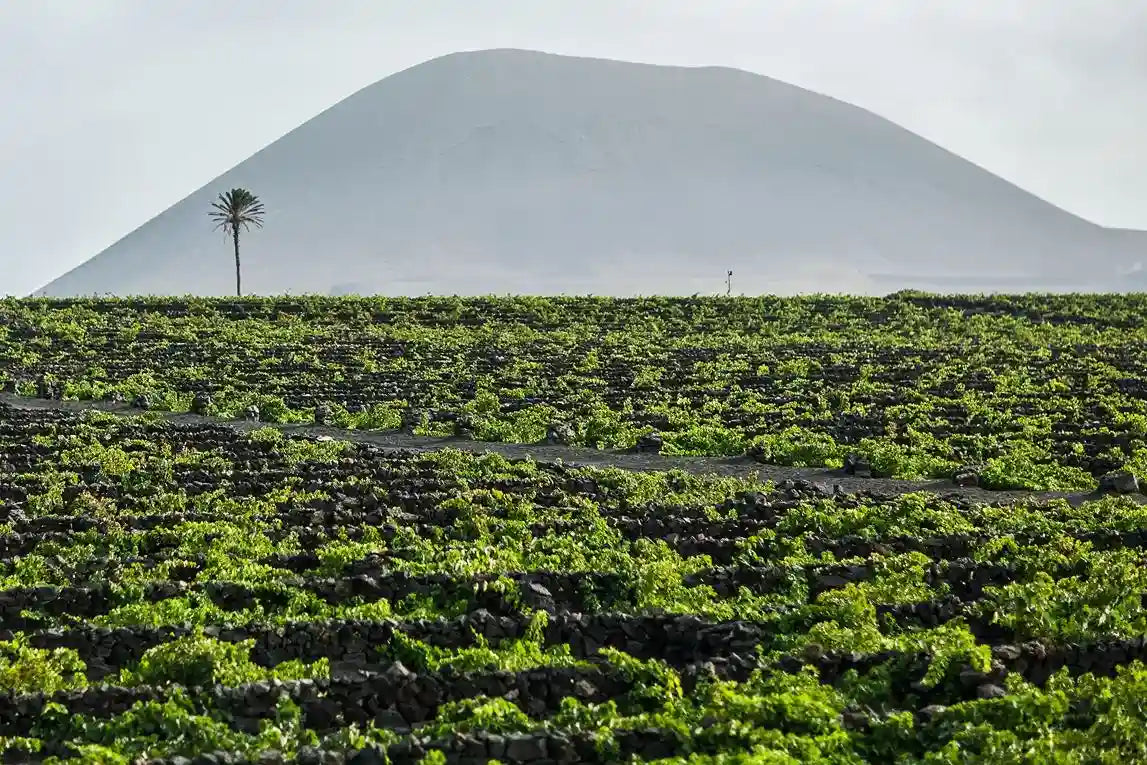
The 2026 harvest is proving to be a great campaign at El Grifo. The grapes are arriving at the winery with very good quality, the result of constant monitoring of our vines and carefully considered decisions about the exact moment to pick each plot.
The wine is made in the vineyard
Before the first grapes ever reach the winery, weeks of work have already gone into the fields. The team has been analysing the development of our vines since early June, at veraison, and works in the vineyards of La Geria selecting plot by plot, so that each batch arrives at the winery at its optimal point.
We continuously monitor the development of each plot, analysing its ripening to decide the exact moment it should come in and which wine it will go into. It's quiet work, but it's the foundation of everything that follows: by the time the grapes reach the winery, they've already been selected, and we know exactly what we're looking for in them.
The grapes arrive at the winery
On July 8th we officially declared the start of the harvest, beginning with the plots of our own organic vineyards selected for our Brut Nature sparkling wine and our Ancestral, two of the house's most distinctive wines. In both cases we were looking for a specific level of acidity, so choosing these plots was no accident: it was the result of weeks of prior monitoring to find just the right moment.
Since then, selected plots from different parts of the island have kept arriving at the winery, according to the parameters we've been measuring and observing in each one. This year ripening has been somewhat slower than usual, but it's precisely that close monitoring that has allowed us to wait for the right moment in each case, without rushing, in search of the best possible quality plot by plot.
And it's precisely this way of working that connects directly to our ageing wines. To achieve wines with the capacity to evolve and age well, the work begins long before the grapes reach the winery: it begins with selecting the plots, continuously monitoring ripening, and deciding on the optimal moment for harvest. A slower ripening process, like this year's, isn't a setback when it comes paired with that close monitoring — it's the guarantee that each plot enters the winery exactly when it should.
The home stretch
By late August, around the 20th, the harvest entered its final stretch for three of our most representative varieties: Malvasía Volcánica, Listán Blanco and Listán Negro.
Finishing the picking of these native grapes marks an important milestone in the campaign calendar, as they form the backbone of many of the wines that define the identity of El Grifo and of the Lanzarote Denomination of Origin.
We now have practically only Moscatel and Vijariego left, among the last varieties to come in each year. We continue analysing these plots day by day to decide the exact moment each one should reach the winery, with the parameters and quality we're looking for.
A high-quality campaign
This year, the heat has affected the calendar, as it has across the whole island and in other Spanish wine regions, generally bringing forward the start of harvests.
It's precisely in years like this one that the difference of working plot by plot stands out most: that close monitoring allows us not to be rushed, and to maintain quality campaign after campaign, regardless of each year's weather conditions.
Working the vineyard in an environment like La Geria, on volcanic ash (picón or rofe) and with barely any rainfall, is already in itself an exercise in constant adaptation, and it's that same demand that makes us care for each plot in such detail.
There are still days of this campaign ahead, but every kilo of grapes that arrives at the winery, carefully selected, brings us a little closer to the moment of sharing this 2026 vintage in the form of wine.